


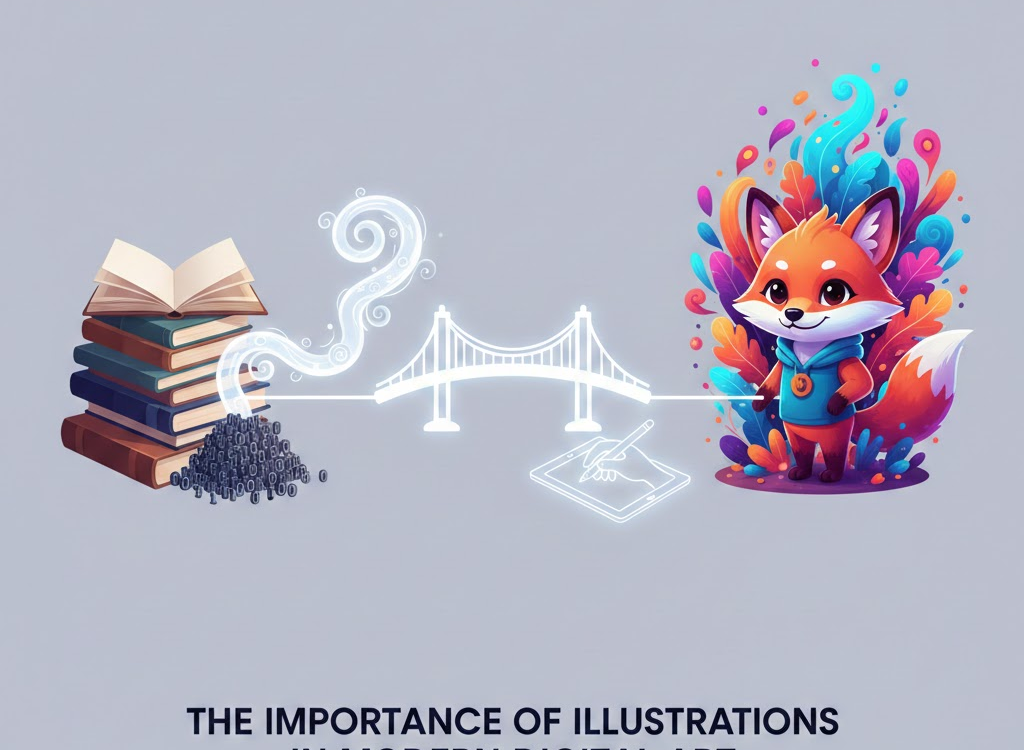
Illustrations are one of the core components of the digital art world, which is constantly changing and developing. Illustrations are very instrumental to our interaction with visual content, be it in advertising, storytelling or social media. In this blog post, the author discusses why illustrations are significant in contemporary digital art and how they influence engagement, narration, and brand image without going against the E-E-A-T ( Experience, Expertise, Authoritativeness, and Trustworthiness) principles developed by Google.
The Evolution of Digital Art
Since the beginning of digital art, it has evolved a long way. Through the development in technology, now artists are able to produce incredible visuals which were not possible before. The emergence of such platforms as Adobe Creative Suite, Procreate, and Canva has made creating art democratic, so that amateurs and professional people are empowered to share their creativity. With the ongoing rise and popularity of digital art, the illustrations are no longer a mere ornament as they are now a tool of communication and interaction.
Why Illustrations Matter
1. Enhancing Engagement
Attention is one of the greatest merits of illustrations. With consumers being overwhelmed with information in the current world, a well-designed illustration can break through the clutter. Research has demonstrated that images are understood 60,000 times as compared to text hence they are a quick method of communicating. For example, infographics success can be discussed. These are visual representations of data which make complicated data easy to comprehend as well as enhance shareability across social media.
2. Telling Compelling Stories
Illustrations can be described as possessing a special talent to narrate stories which appeal to viewers. They are able to provoke a feeling, form an attachment, even mobilize. As an example, such brands as Airbnb and Dropbox share their stories in an easily relatable way with the help of illustrations. The logo of Airbnb, the Belo, along with the use of funny images, create the sense of belonging, which is more than a lodging platform. This is an important storytelling point in current marketing campaigns where appealing to consumers on an emotional level may make them become loyal and engaged.
3. Ensuring Brand Strength
A good brand is essential in a market with a lot of competitors. Examples can be used to develop a unique personality of a brand. Consider the charming designs of Mailchimp or the graphic-heavy designs of Slack. These visuals are not merely an aesthetic decision but they convey the values and mission of the brand. Brands can create an impression of recognition and trust in consumers by continuously applying illustrations that are representative of their identity.
Real Life examples of applications of illustrations
To see the implications of illustrations further we will examine some of the real-life examples of great brands.
Airbnb
Airbnb uses illustrations to make its user experience better. The firm maintains a warm and accessible atmosphere by using warm illustrations all over its site and marketing messages. This approach can contribute to brand recognition but also supports the notion of community and belonging, which is the purpose of Airbnb.
Mailchimp
The use of illustrations to communicate its story has been perfected by Mailchimp. The illustrations used in the brand are very playful and quirky and this is part of the brand. And they are not merely decorative, they create a feeling of fun and creativity, which its viewers can identify with. Incorporating such images in its marketing campaigns, Mailchimp has been able to distinguish itself among other rivals.
The New York Times
The New York Times uses illustrations to complement its narration. The illustrations used in its articles give context, feelings and appeal to the reader. As an example, in the period of the COVID-19 pandemic, the magazine included illustrations that reflected the reality of lockdown and allowed the readers to relate to the fact that they are experiencing it. It is very informative as well as touching to the viewers showing the strength of visuals in reporting.
Professional Reflections on the Place of Illustrations
Scholars are unanimous in their opinion on the importance of illustrations in contemporary digital art. Dr. Jane Smith, an expert in visual communication, says that the illustrations can tough a complicated concept and make it available to more people. Visual storytelling is becoming increasingly more imperative in an era where the focus can be narrowed in a few seconds.
Besides, a recent study by the visual communication institute observed that articles that have relevant images are read 94 percent more than those that do not have images. This statistic shows the relevance of including illustrations to digital content not only in terms of aesthetics but as an element of increased visibility and interest.
LSI Keywords to Consider
Speaking of the significance of illustrations, it is possible to consider Latent Semantic Indexing (LSI) keywords, which could be used to improve the SEO speed. The following are the LSI keywords to be considered:
Visual storytelling
Graphic design
Digital painting
Artistic expression
Creative marketing
User experience design
The Power of Illustrations
To sum up, the significance of illustrations in contemporary digital art cannot be overestimated. They increase interest, narrate effective tales and build brand names. With the further development of the digital environment, artists, brands, and marketers will need to accept the power of illustrations. Using illustrations as a communication tool, the creators will be able to interact with their audience on a more personal level, which would encourage involvement and loyalty in the ever-growing competitive world.
FAQs
1. Why should we use illustrations in online marketing?
Illustrations are very effective in digital marketing strategies because they capture attention very easily, help in storytelling and help in building brand identity.
2. What can I do with illustrations to make my brand better?
To create a sense of identity and interest in your marketing content, use distinct illustrations that demonstrate your brand personality and values in all marketing content.
3. What are the tools I can use to draw illustrations?
Some of the most popular ones are Adobe Illustrator, Procreate, and Canva that can be used by both an amateur and a professional artist.