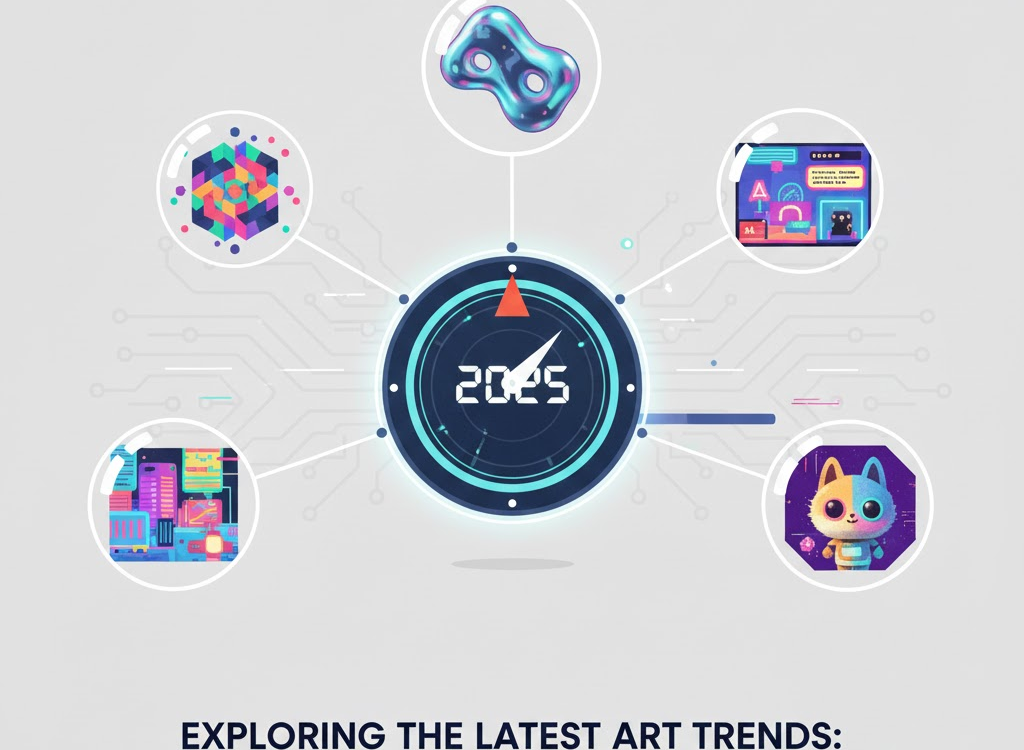
In the eve of 2026, the art world is constantly developing as it is influenced by the complications of modern society and simultaneously adapts to the changes in technology and the cultural priorities. There are a number of art tendencies that are making a breakthrough this year not only to express the innovative spirit of artists but also to address the global challenges and opportunities. In the following section, we discuss the current art trends which influence the picture of the future in 2025.
1. Digital Art and NFTs
The Rise of Digital Art
Digital art has been on the rise in the last couple of years, but in 2025, it has attained new levels. Digital platforms are becoming more popular with artists creating, displaying and selling their work through digital channels. Due to the spread of tablets and sophisticated software development, it has never been simpler to produce breathtaking digital illustrations, animations and mixed media works.
NFTs: A New Frontier
Non-fungible tokens (NFTs) remain one of the major trends of the art market. NFTs are being used by artists to sell their digital art, which offers a distinctive means of establishing ownership and authenticity. The NFT market has grown, and artists are experimenting with collaborations and having limited editions that will attract collectors. The new economic model enables artists to engage audiences worldwide and earn money in new ways.
2. Sustainability and Eco-Art
Increasing Environmental Consciousness
In 2025, sustainability in art is as significant as it has never been. With climate change and environmental degradation remaining burning world topics, artists are starting to respond in a bid to create something environmentally friendly by putting into their art work environmentally friendly materials and practices. Sustainability is a contemporary art force, whether through the recycled material used in the creation of artistic works or in the works of art themselves, in their creation or the messages they convey to the viewer on environmental matters.
Eco-Art Movements
Artists are setting up movements with environmental interests, and they depict works that highlight the beauty of nature and the urgency of conserving it. Installation art which responds to natural conditions, biodegradable substances, and environmentally conscious art is gaining popularity. The trend does not only indicate the dedication of the artists towards the planet but it also makes viewers think about their connection with nature.
3. Diversity and Inclusivity
Embracing Diversity of Views
The drive of diversity and inclusivity is something that is still continuing to influence the art world in 2025. A range of artists of different backgrounds are becoming visible, presenting their different opinions and experiences. This direction makes the art more about representation and results in an increased variety of topics and stories that appeal to different groups of people.
Collaborative Projects
There are numerous artists that are working on collaborative projects, which emphasize cultural interactions and experience. These alliances are frequently cross-disciplinary, a mixture of visual arts and performance, music, and narratives. Through such partnerships, not only do you get an enrichment in the artistic process, but also community building and understanding amongst other cultures.
4. The Impact of Social Media
Online Platforms as Art Galleries
Social media has become a very critical resource to artists in 2025 where artists can display their work and reach out to audiences. Instagram, Tik Tok, and other channels enable artists to tell their process, interact with their fans, and make their brands.
Viral Trends and Challenges
Viral art trends and challenges are also brought about by the fast nature of social media. The thing is that artists are mostly inspired by what they watch online, and new ideas and styles which are based on any contemporary cultural phenomenon appear. This interrelation creates an active artistic environment, and trends can have a rapid appearance and development.
5. Interdisciplinary and Mixed Media
Blending Mediums
Mixed media art is expected to flourish in 2025 as different materials and techniques are explored by artists. Artists can merge the old and the new with the help of applying the multidimensional approach, and they can break established limits. It is a tendency which promotes innovation and gives the artists the chance to render complex ideas in various forms.
Interdisciplinary Collaboration
Interdisciplinary methods are increasing as well, as artists have been working in science, technology, and social activism. Such collaborations result in provocative pieces that act on urgent problems with an element of research and discovery. Such partnerships increase the pertinence and relevancy of art in society.
6. Virtual Reality and Augmented Reality
Immersive Experiences
In 2025, virtual and augmented reality (VR and AR) will remain important in the development of art experiences. These technologies are being utilized by artists in the development of immersive installations that require more in depth engagement with the audience. VR enables users to access the digital worlds by literally going there and AR can be used to augment the real ones with digital information to form a mixture of reality and imagination.
Interactive Art
Interactive art experiences are increasingly gaining popularity and are asking people to engage in the generation and consumption of art. The trend does not just make art more democratic but it also creates a feel of community because the viewers are co creators of the artistic process.
7. Minimalism and Simplicity
A Return to Basics
Minimalism is one art trend that will be relevant in 2025, in a world that is usually chaotic and complex. Simplicity, emphasis on basic aspects, clean lines and subtle color palettes are all the trends that many artists are adopting. Minimalist art presents a relaxing aesthetic that appeals to the audience that wants to find clarity and tranquility in visual experiences.
The Power of Negative Space
The effective use of negative space is also one of the characteristics of the minimalist design, as it enables art pieces to breathe and focus on their central messages. This development allows artists to consider composition and the emotions that they intend to evoke critically and has created effective and memorable artworks.
Conclusion
As the future art trends are discussed in 2025, one must admit that the art world is colorful, moving, and intertwined with the issues of society and technology on a deep level. Since the emergence of the digital art world and sustainability, celebrating diversity, and the impact of social media, these tendencies are the representatives of the challenging nature of modern life. The future of art is bound to be a creative one as new artists keep challenging the norm and exploring new concepts. By adopting these trends, artists will be able to reach out to their audience and make the world a more inclusive and engaged society.